
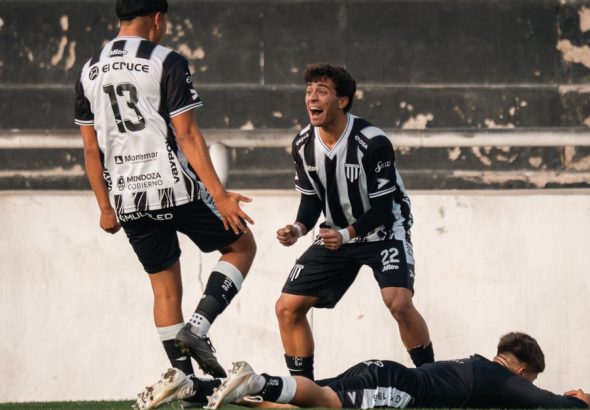
Bruno Fernandes, who was named PFA Player of the Year just seven weeks ago, is under scrutiny...
Football soccer positions are essential to understanding the dynamics of the game, as each role - forward, midfielder, defender, and goalkeeper - contributes uniquely to the team's success. This guide explores the distinct responsibilities and strategic importance of each position, highlighting how they work together to enhance overall performance. Additionally, it examines the evolution of these roles in response to changing tactics and styles of play throughout the history of soccer.
Manchester United came close to a comfortable victory over Tottenham Hotspur at Old Trafford on Saturday, but...
Professional goalkeepers are defined by their extensive training, critical game experiences, and the evolution of their careers,...
Starting defenders play a crucial role in soccer, blending physical strength, mental resilience, and tactical acumen to...
In the dynamic world of soccer, a goalkeeper’s effectiveness hinges on three critical skills: reflexes, agility, and...
Youth defenders play a critical role in safeguarding their team’s goal, requiring mastery of essential skills such...
What are the primary soccer positions and their roles?
The primary soccer positions include forwards, midfielders, defenders, and goalkeepers, each with distinct roles that contribute to the team's overall performance. Understanding these positions helps players and fans appreciate the game's complexity and strategy.
Forwards: key responsibilities and skills
Forwards are primarily responsible for scoring goals and creating offensive opportunities. They need strong shooting skills, quick pace, and the ability to read the game to exploit defensive weaknesses.
In addition to scoring, forwards often assist in pressing the opposing defence, requiring them to possess good stamina and teamwork skills. Their positioning and movement off the ball are crucial for creating space and chances for themselves and their teammates.
Midfielders: roles in playmaking and defence
Midfielders serve as the link between defence and attack, playing a vital role in both creating scoring opportunities and disrupting the opponent's play. They are often involved in passing, dribbling, and tactical decision-making.
There are typically two types of midfielders: attacking and defensive. Attacking midfielders focus on creating chances and scoring, while defensive midfielders prioritise breaking up opposition plays and supporting the defence.
Defenders: types and their defensive strategies
Defenders are tasked with preventing the opposing team from scoring, and they come in several types, including centre-backs, full-backs, and wing-backs. Each type has specific responsibilities, such as marking attackers or providing width in defence.
Defensive strategies often involve positioning, tackling, and intercepting passes. Effective communication and teamwork among defenders are essential to maintain a solid defensive line and minimise scoring opportunities for opponents.
Goalkeepers: unique skills and responsibilities
Goalkeepers have the unique responsibility of guarding the goal and preventing the opposing team from scoring. They require exceptional reflexes, agility, and the ability to read the game to anticipate shots and crosses.
In addition to shot-stopping, goalkeepers often play a crucial role in initiating attacks by distributing the ball to teammates. Their leadership on the field is vital for organising the defence and communicating effectively during set pieces.
Positioning on the field: diagrams and formations
Soccer positions are organised into various formations that dictate how players are positioned on the field. Common formations include 4-4-2, 4-3-3, and 3-5-2, each offering different tactical advantages.
Understanding these formations helps players know their roles and responsibilities during different phases of the game. Diagrams illustrating these formations can clarify how players interact and maintain structure during play.
How positions interact in team dynamics
The interaction between different positions is crucial for a team's success. Forwards rely on midfielders to create scoring opportunities, while defenders depend on midfielders to support in both attack and defence.
Effective communication and understanding among players in different positions enhance teamwork and overall performance. Each player's awareness of their teammates' roles fosters a cohesive unit that can adapt to various game situations.
Which soccer positions are most critical for team success?
The most critical soccer positions for team success include forwards, midfielders, defenders, and the goalkeeper. Each position plays a unique role that contributes to the overall performance and effectiveness of the team on the field.
Impact of forwards on scoring
Forwards are primarily responsible for scoring goals, making them essential for a team's offensive strategy. Their ability to create and convert scoring opportunities directly influences the team's chances of winning matches.
Effective forwards possess skills such as speed, agility, and precise finishing. They often work in tandem with midfielders to exploit defensive weaknesses and capitalise on goal-scoring chances.
Importance of midfield control
Midfielders serve as the link between defence and attack, controlling the flow of the game. They are crucial for maintaining possession, distributing the ball, and supporting both offensive and defensive plays.
A strong midfield presence can dictate the pace of the game and create opportunities for forwards while also providing defensive cover. Midfielders with good vision and passing ability can significantly enhance a team's overall performance.
Defensive solidity and its influence on outcomes
Defenders play a vital role in maintaining a team's defensive integrity, preventing the opposition from scoring. Their ability to read the game, tackle effectively, and organise the backline is essential for team success.
Solid defensive performances can lead to fewer goals conceded, which is critical in tight matches. A well-structured defence allows a team to build confidence and can often lead to counter-attacking opportunities.
Goalkeeper's role in preventing goals
The goalkeeper is the last line of defence and is crucial for preventing goals. Their skills in shot-stopping, positioning, and decision-making can significantly impact the outcome of a match.
A reliable goalkeeper not only saves shots but also organises the defence and initiates attacks with accurate distribution. Their performance can be the difference between winning and losing, making this position one of the most important on the field.
How have soccer positions evolved over time?
Soccer positions have evolved significantly, reflecting changes in tactics, player roles, and the overall style of play. From rigid formations in the early days to fluid roles in modern soccer, the evolution has shaped how teams operate on the field.
Historical changes in player roles
In the early 20th century, soccer positions were often defined by rigid roles, such as forwards, half-backs, and full-backs. As the game progressed, players began to take on more versatile roles, with an emphasis on teamwork and adaptability. This shift allowed players to contribute in multiple areas of the field, leading to a more dynamic style of play.
Notable historical changes include the transition from the classic WM formation to the 4-4-2 setup, which introduced more balance between defence and attack. This evolution paved the way for modern formations that prioritise fluidity and player interchangeability.
Influence of tactics on position development
Tactics have played a crucial role in the development of soccer positions, as coaches adapt strategies to exploit opponents' weaknesses. The introduction of pressing systems and possession-based play has led to the emergence of specialised roles, such as the deep-lying playmaker or the false nine. These tactical innovations have redefined traditional positions, requiring players to possess a broader skill set.
Furthermore, the rise of analytics in soccer has influenced how teams approach player roles, emphasising data-driven decisions in position assignments and formations. Coaches now consider players' strengths and weaknesses in relation to their tactical philosophy, further shaping the evolution of positions.
Modern formations and their impact on positions
Modern formations, such as 4-3-3 and 3-5-2, have significantly impacted how positions are defined and played. These formations often require players to be more versatile, capable of switching between offensive and defensive duties seamlessly. For instance, wing-backs in a 3-5-2 formation must contribute to both defence and attack, blurring the lines between traditional roles.
Additionally, the trend towards fluid formations has led to the concept of positionless soccer, where players are expected to adapt to various roles during a match. This evolution reflects the ongoing changes in the game, emphasising the importance of adaptability and skill over rigid positional definitions.
What are the differences between similar soccer positions?
Similar soccer positions often have overlapping responsibilities but differ in their specific roles on the field. Understanding these distinctions is crucial for players and coaches to optimise team performance.
Striker vs. Winger: roles and responsibilities
A striker primarily focuses on scoring goals and is positioned centrally near the opponent's goal. Their main responsibility is to convert chances into goals, often relying on positioning, finishing skills, and quick decision-making.
In contrast, a winger operates on the flanks of the field, aiming to create scoring opportunities through crosses and assists. Wingers are crucial for stretching the defence and providing width, often using their speed and dribbling skills to beat defenders.
Centre-back vs. Full-back: defensive strategies
Centre-backs are key players in the central defence, tasked with blocking opposing strikers and winning aerial duels. Their role involves organising the defence and making crucial tackles to prevent goals.
Full-backs, on the other hand, play on the outer edges of the defence and often engage in both defensive and offensive duties. They support the attack by overlapping with wingers and delivering crosses while also needing to track back to defend against opposing wingers.
Attacking Midfielder vs. Defensive Midfielder: tactical roles
An attacking midfielder is responsible for linking play between the midfield and the forwards, often creating goal-scoring opportunities through passes and vision. They are typically more offensive-minded, looking to exploit gaps in the opponent's defence.
Conversely, a defensive midfielder focuses on breaking up opposition attacks and providing cover for the defence. Their role is crucial in maintaining possession and transitioning the ball from defence to attack, often requiring strong tackling and positional awareness.
How to choose the right soccer position for a player?
Choosing the right soccer position for a player involves evaluating their skills, physical attributes, and personal preferences. Understanding the roles and responsibilities of each position can help align a player's strengths with the team's needs.
Assessing player skills and attributes
To assess a player's skills and attributes, start by identifying their technical abilities, such as dribbling, passing, and shooting. These skills are crucial for determining whether a player is suited for offensive or defensive roles.
Next, consider physical attributes like speed, strength, and stamina. For instance, faster players may excel as wingers or forwards, while stronger players might be better suited for central defensive positions.
Additionally, evaluate a player's tactical understanding and decision-making abilities. Players with strong game awareness can thrive in midfield roles, where they need to read the game and make quick decisions.